🌍 Inside The Middle East — June 10
Israel Arrests Palestinian Al Jazeera Journalist, Hezbollah Founder Dies, Arab World’s First Holocaust Exhibition, Erdoğan Opens New Mosque, UN Sounds Taliban Alarm, Saudi Arabia-Syria Normalization

Hello folks, welcome to another edition of Inside The Middle East, where we round up the most important news from the most important region.
Another full slate today as we’ll visit East Jerusalem where Israeli police arrested Palestinian Al Jazeera journalist Givara Budeiri; Iran where the founder of Lebanese terrorist group Hezbollah has died; Dubai which is home to the Arab World’s first holocaust exhibition; Turkey where President Erdoğan opened a symbolic new mosque in the center of Istanbul; Afghanistan where the UN sounded the alarm over rising Taliban violence; and Saudi Arabia who is close to normalizing diplomatic ties with Syria.
Be sure to check out Monday’s newsletter where Daniel wants to help you get your second hustle or project off the ground. Subscribe below and he’ll give you all the time it takes to do so. And keep an eye out for tomorrow’s Picks of the Week where we’ll dissect the latest news from around the globe.
Jobs and data below. Let’s. Do. This. Thing. 🌍
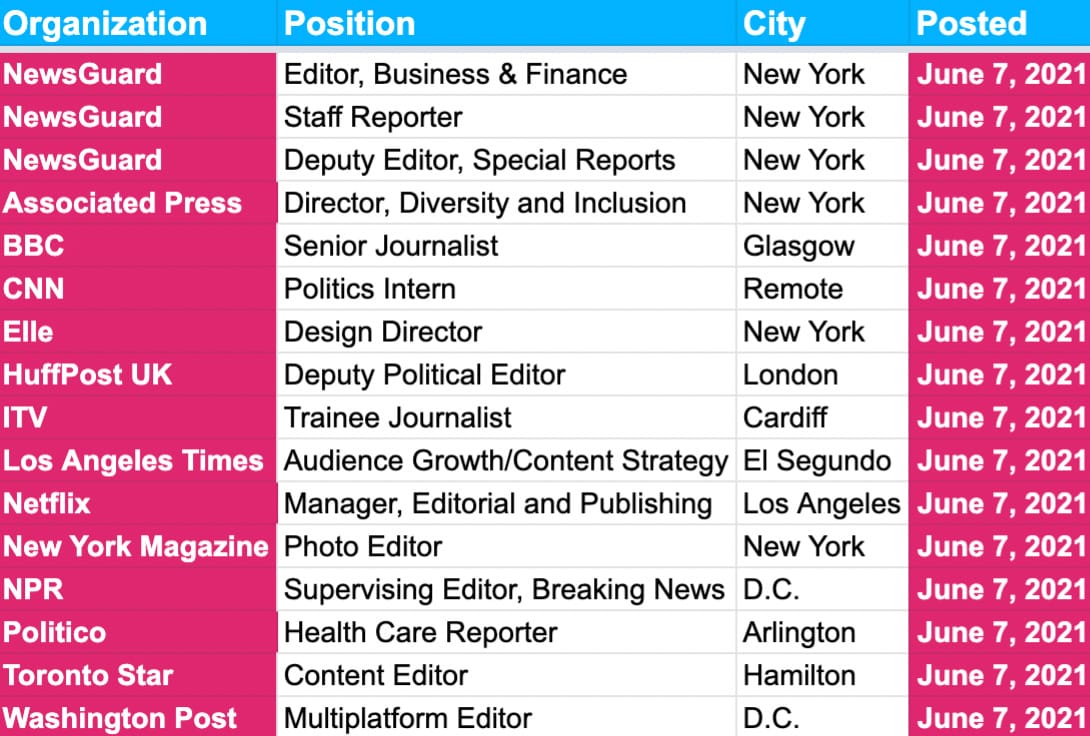
Job Corner ✍️
We added another 400+ jobs over the weekend. Preview below and subscribe! 🤙
If you’re a paying member, your jobs sheet link will remain the same. Interested in a free week’s trial? Reply to this email and we’ll hook you up!
Data Corner 🧮
A couple datasets referenced in today’s edition…
- Global Diplomacy: Which countries have diplomatic relations with who as of 2019, from the Lowy Institute
- Holocaust: Holocaust survivor and victim database, from the United States Holocaust Memorial Museum
Israel Arrests Journalist and Activists
We start today in Israel where Al Jazeera Palestinian journalist Givara Budeiri was arrested by Israeli police while covering a demonstration in Sheikh Jarrah. The East Jerusalem neighbourhood is at the centre of a contentious Supreme Court case, where several Palestinian families are facing eviction over a dispute of who their homes and land belong to.
Israeli police said they removed Budeiri because she was unable to produce a government-issued press card, and arrested her because she allegedly attacked officers. But witnesses say the police didn’t give Budeiri a chance to retrieve the ID card from her car. Budeiri was released after a few hours and spent a night in hospital for a broken hand.
A day later, Israeli police arrested Muna and Muhammad al-Kurd, members of one of the Palestinian families fighting eviction. They helped lead weeks of protest that faced violent police suppression, which was one of the triggers for the 11-day war between Israel and Hamas in the Gaza Strip last month. Tensions are heightened once again as Israeli nationalists plan to march through the Muslim Quarter of Jerusalem’s Old City.
Video: Givara Budeiri recounts arrest by Israeli police
Saudi Arabia and Syria Close to Normalization
To Syria and Saudi Arabia next, who are reportedly close to normalizing diplomatic relations after years of conflict and tension. Saudi was key in trying to oust Syrian President Bashar al-Assad since the start of Syria’s Civil War, providing rebel groups with funding and weapons. But after a decade of internal conflict, Assad — with help from Iran — has withstood the worst and is perhaps as strong as he’s been since before the Arab Spring in 2011.
As an acknowledgement that Assad is here to stay, the Saudis are now motivated to limit Iran’s influence in Syria. According to an anonymous Saudi government individual, “MBS [Crown Prince Mohammed bin Salman] instructed his team to reassure Syria that he does not want regime change against Bashar, and that Syria, as a brotherly Arab nation, should naturally be close to Saudi Arabia.” The problem for Assad, however, is that he continues to rely heavily on Iran and its proxy militia to fend off the remaining rebels trying to topple him and his administration.
Video: Syria’s War — Who is Fighting and Why
Last Time on Inside The Middle East…
🌍 Inside The Middle East — June 3
🌍 Inside The Middle East — May 27
🌍 Israel-Palestine Violence Explained— May 13
🌍 Inside The Middle East — April 29
Arab World’s First Holocaust Exhibition
Now onto the U.A.E. where the first Holocaust exhibition in the Arab World has opened in Dubai. The ‘We Remember’ exhibition showcases first-hand testimonies of Holocaust survivors, explores the Holocaust’s preceding events and includes a special tribute to the Arabs who protected Jews. The Nazis murdered more than six million Jews during the Holocaust, as well as other ethnic minorities, political dissidents, the disabled and members from the LGBT community.
Off the back of the historic diplomatic normalization between Israel and the U.A.E. last summer, the aim of the exhibition is to educate and raise awareness of the Holocaust to Dubai’s 200 different nationalities. Rabbi Elie Abadie, senior rabbi at the Jewish Council of the Emirates, said “Although most people in the Middle East know the Holocaust took place, they do not speak or learn about it as much.” He added that many Arab Jews were part of the Holocaust in the Middle East, due to the courting of Muslim leaders by the Nazis.
Erdoğan Inaugurates New Mosque
To Turkey where President Recep Tayyip Erdoğan inaugurated a new mosque in Istanbul, settling a decades-long dispute over the religious identity of Taksim Square. The mosque symbolically dwarfs the square’s Republic Monument honouring Turkey’s secularist founder Mustafa Kemal Atatürk. Upon performing Friday prayers with thousands of worshippers, Erdogan said the completion of the mosque marked the culmination of a dream for Turks, and the call to prayer would be heard here “until the end of time”.
A devout Muslim and leader of the conservative AK Party, Erdoğan adds to his legacy with the construction of Taksim Mosque, which he pledged to build when he became Mayor of Istanbul in 1994. Erdoğan also ordered the conversion of Hagia Sophia from a museum back into a mosque last year. The inauguration coincides with the anniversary of anti-government protests that began in nearby Gezi Park in 2013, due to government construction plans.
UN Sounds Taliban Alarm
To Afghanistan where a new UN Security Council report suggests that an emboldened Taliban remains close to Al-Qaeda and believes it can return to power by force if necessary, posing a grave threat to the government of Afghanistan. With the last U.S. troops expected to leave the country before the 20th anniversary of 9/11 in September, the report paints a bleak picture for future security.
The U.S. troop removal comes amid Afghanistan’s highest level of violence in two decades. The Taliban has strengthened its grip on power in recent years and now control more than half of the country’s district administrative centers, while contesting or controlling up to 70 percent of rural land. This has led to security incidents rising more than 60 percent in the first three months of 2021, compared to the same period last year.
Hezbollah Founder Dies
We finish today in Iran where the founder of Hezbollah, the terrorist group that operates as a political and military wing in Lebanon, died on Monday due to Covid-19. Ali Akbar Mohtashamipour was a close ally of Iran’s late Supreme Leader Ayatollah Ruhollah Khomeini, and also helped found Iran’s Revolutionary Guard. Iranian President Hassan Rouhani said Mohtashamipour “devoted his life to promote Islamic movement and realization of the revolution’s ideals’’.
Hezbollah emerged during Lebanon’s 15-year civil war that started in 1975, and through several conflicts with Israel and in Syria, has ascended to become one of the world’s most powerful militant groups. Designated a terrorist organisation by most of the West, the U.S. blames Hezbollah for the 1983 bombings of Lebanon’s U.S. Embassy and a U.S. Marine barracks that killed 241 troops.
Video: Hezbollah: The world's most powerful militant group?
See you tomorrow for Picks of the Week! 👋